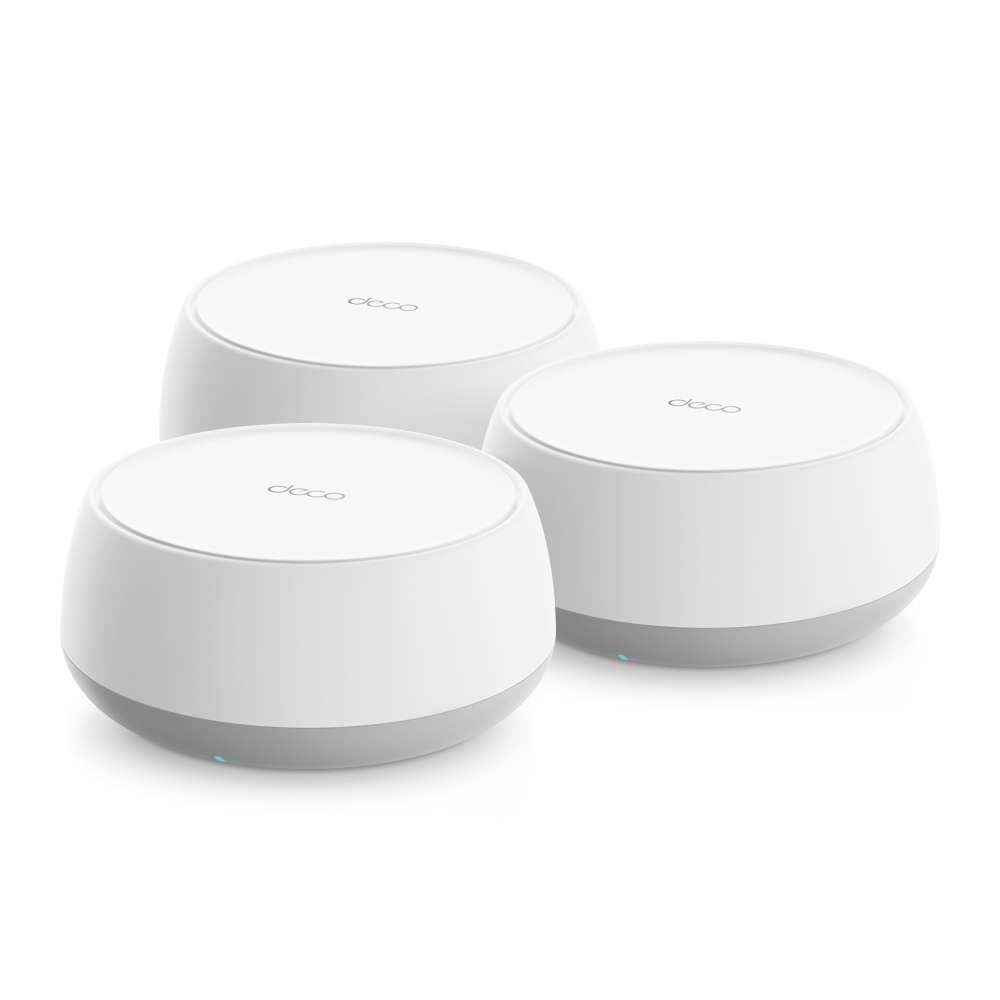
The TP-Link Deco BE65-PoE combines Wi-Fi 7 mesh networking with power over Ethernet. Its practical advantage is placement: a suitable Ethernet run can carry both power and data to a wall or ceiling position, reducing dependence on a nearby socket. The result still depends on the exact regional model, client devices and the network behind it.
Check the exact BE65-PoE model
TP-Link lists different wireless specifications by region. The US product page labels the system BE11000 and advertises 5,765 Mbps on 6 GHz, 4,324 Mbps on 5 GHz and 688 Mbps on 2.4 GHz. The UK listing labels it BE9300, with a lower advertised 5 GHz rate of 2,882 Mbps.
Those are physical radio rates, combined across bands for the product’s speed class. They are not a measured internet download speed or a promise that one client receives the sum. Country restrictions and compatible client features also affect channel width and operation.
The original international product link is retained here. Match the specification to the model label and hardware revision sold locally rather than relying on the headline from a different region.
Ports and power options
| Feature | What TP-Link documents | Practical check |
|---|---|---|
| Ethernet | Two 5 Gbps WAN/LAN ports per unit | Confirm supported link rates on the switch or injector and the actual negotiated speed. |
| PoE input | 802.3at PoE | Use a compatible active PoE+ source with enough available budget. |
| Alternative power | 12 V DC, supplied adapter | Use the correct included/regional adapter and appropriate mounting position. |
| Installation | Tabletop, wall or ceiling options | Check the mounting kit and suitable fixings for the actual surface. |
| Management | Deco app and router/AP operation | Choose which device routes the network and follow the current app instructions. |
The BE65-PoE’s documented ports are two 5 Gbps ports. A switch’s separate 10 Gbps uplink does not turn its access ports, or the Deco’s ports, into 10 Gbps connections. Also check the supported intermediate speeds: “10G” equipment should not be assumed to negotiate every lower multigigabit rate.
PoE supplies electrical power over the Ethernet cable; it is different from powerline networking, which carries network data over mains wiring. The BE65-PoE needs a suitable Ethernet path for PoE. A normal non-PoE Ethernet socket cannot power the unit.
What Wi-Fi 7 adds, and what it needs
The model supports features such as 4K-QAM, multi-link operation and up to 320 MHz channels on 6 GHz, subject to regional and client support. A Wi-Fi 5 device does not gain those features simply by joining the new mesh. Even a Wi-Fi 7 device needs the relevant bands, drivers and features enabled.
The 6 GHz band may offer useful additional spectrum, but it is not interference-free and does not guarantee coverage through several walls. Wider channels and higher modulation rates need suitable signal conditions. Test the intended rooms rather than inferring real performance from a combined speed class.
Multi-link operation can use supported links together. Whether that improves a particular transfer or reduces interruptions depends on the client and environment. It does not promise zero gaming lag or uninterrupted video when the ISP, destination service or backhaul is the bottleneck.
Plan the PoE source and budget
Use the model’s 802.3at requirement when selecting a PoE switch or injector. Check the source’s per-port capability and its total shared power budget. The sum available across all ports matters when several Decos, cameras or other devices draw power together.
Do not size a three-node installation from an assumed 23-watt measurement. Use the rated requirements and power allocation information for the actual units and source. A switch with several PoE+ sockets can still have a total budget too small to power every attached device at its maximum allocation.
For example, write a port plan before buying: main Deco, two satellites, any cameras, the upstream connection and spare ports. Record which ports provide the required PoE standard and which provide the required data rate. Check budget and link negotiation after all equipment is connected, not only with one node on the desk.
Our Power over Ethernet guide explains the concept, while the switch manufacturer’s current data sheet establishes its actual port capabilities. An injector can add compatible power to a non-PoE path, but it must also support the intended Ethernet speeds; the PoE wattage alone is not enough.
Wire and mount for a useful backhaul
Use suitable standards-compliant Ethernet cabling, connectors and installation practices for the link length and intended speed. Read the solid copper versus copper-clad aluminium guide when evaluating cable materials. A category name on a cable does not replace a properly terminated and tested run.
Test power and the negotiated link before fixing a node in a difficult-to-reach ceiling position. Leave an appropriate service loop and follow the mounting instructions for the supplied bracket. Do not assume every junction box, wall material or pack has identical accessories.
In router mode, plan the switch downstream of the main Deco’s LAN connection, with satellites connected according to TP-Link’s Ethernet backhaul guidance. Avoid casually connecting satellite nodes to the modem side of the main router. Access-point mode has a different routing arrangement because an existing router handles the network.
A second port can serve a suitable wired device or downstream connection when configured as LAN. It is not a promise of PoE output to that device. Check the port’s intended role and the downstream equipment’s own power needs.
Verify the household result
First establish a wired baseline near the main Deco. Then use the same client to test each intended location, recording its band, node and backhaul connection. Repeat when the household is active. Separate a local file-transfer test from an internet speed test so an ISP limit is not mistaken for a wireless fault.
Confirm wired backhaul in the app and inspect switch link status where available. A powered node may still be operating through a slower link than planned. For roaming, walk the real route while using the relevant application; a shared network name does not guarantee every client changes node at the ideal moment.
Choose for placement and workload
The desktop BE65 guide and our Wi-Fi 6 Deco comparison provide related options. Compare the exact models rather than transferring specifications between similarly named products. PoE is particularly useful when an Ethernet cable already reaches a good access-point position.
HomeShield includes basic and paid features; check the current plan and app options for the controls you need. Treat filtering and device protections as part of network maintenance rather than complete protection from every threat.
The BE65-PoE can simplify a carefully planned installation. Its value comes from useful placement, compatible power and a working data path—not from assuming every device can use the highest advertised wireless rate.


