Single-board computers are useful when you want a small computer dedicated to a particular job. Alongside the Raspberry Pi, Radxa offers alternatives with different storage, display and AI capabilities. The ROCK 4D is particularly interesting because its AI accelerator is built into the processor. That makes it a compelling candidate for local vision and multimedia projects, provided the software can use the hardware.
A Quick Look at Radxa
Radxa was founded in Shenzhen in 2012; its first ROCK single-board computer followed in 2013. The name comes from the Latin radix, meaning root. Its range includes single-board computers and computer-on-module products, with an emphasis on open hardware and software resources. The company's history distinguishes its founding from the first board launch.
What the ROCK 4D Provides
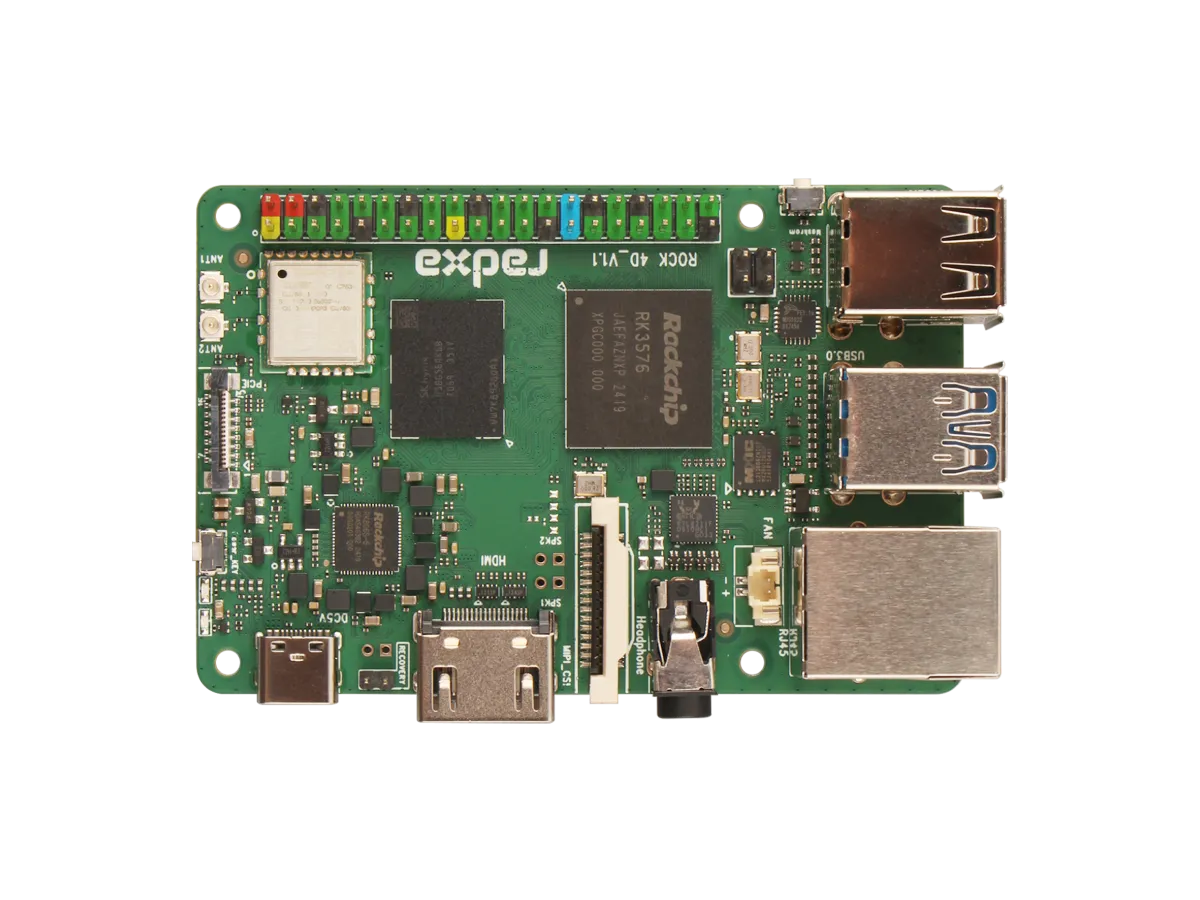
The ROCK 4D uses Rockchip's RK3576, with four Cortex-A72 and four Cortex-A53 CPU cores. Radxa also documents an RK3576J industrial variant. The smaller cores and larger cores serve different workload needs; having eight cores does not automatically make it faster than another board with four newer cores.
The integrated neural processing unit is rated at up to 6 TOPS with INT8 operations. TOPS measures a theoretical operation rate at a specified precision. It is not a promise of camera count, recognition accuracy or application speed. The GPU, video processing hardware and NPU also have distinct jobs: accelerating an object detector does not automatically accelerate a media player's decoder.
- Memory: LPDDR5 configurations up to 16 GB provide room for multiple services and model data, although a larger capacity does not fix unsupported software.
- Displays: Radxa documents HDMI output up to 4K at 120 Hz and a MIPI DSI display interface. These are interface capabilities, requiring a suitable display, cable, operating system and application.
- Storage: microSD and UFS/eMMC options are available. Check the exact board revision: Radxa's diagrams distinguish revisions with different module connector arrangements.
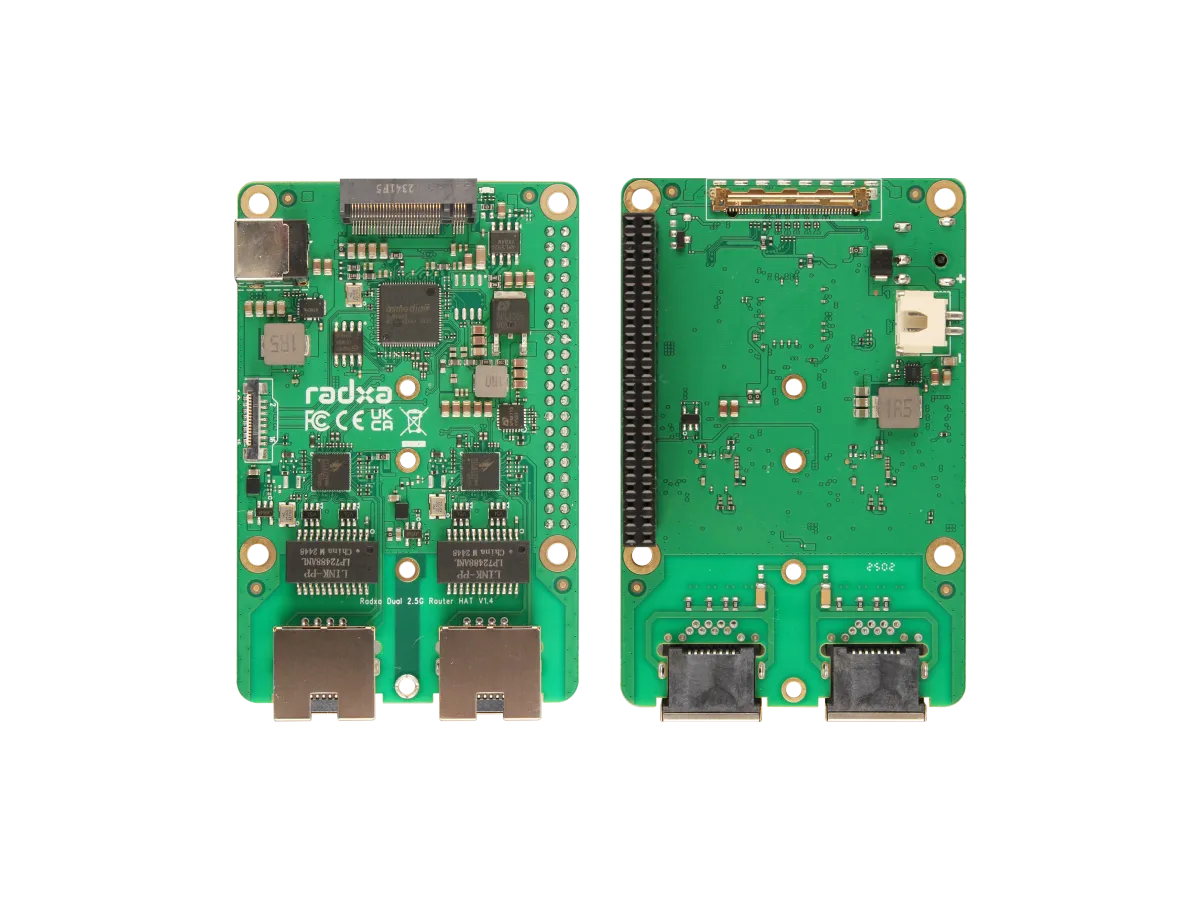
- Networking: onboard Gigabit Ethernet, Wi-Fi 6 and Bluetooth 5.4. Power over Ethernet requires an additional compatible HAT; the Ethernet socket alone does not power the board.
- Expansion: a PCIe 2.1 x1 FPC connector and a 40-pin GPIO header. The header's shape does not establish electrical, mechanical or driver compatibility with every Raspberry Pi accessory.
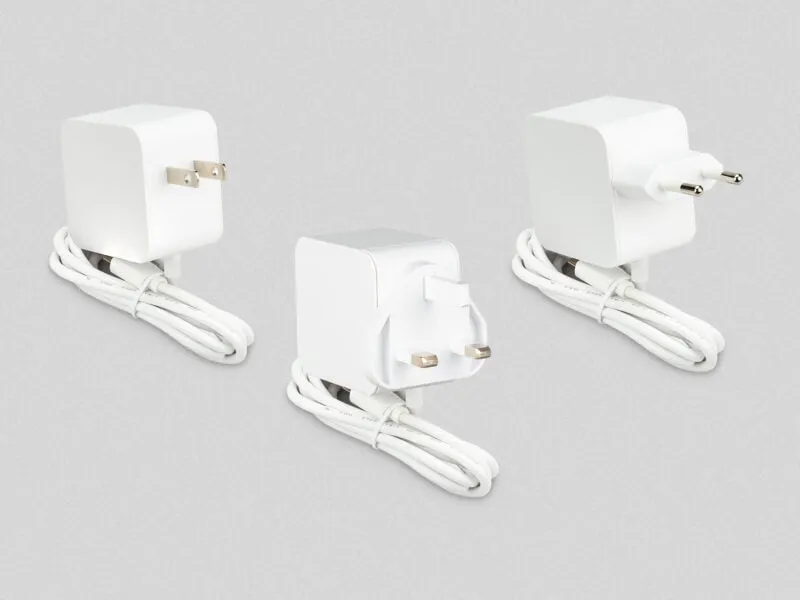
Use the ROCK 4D documentation and the product brief for the exact revision and interfaces. Radxa specifies 5 V power input. Budget for the board, attached drives and USB devices rather than choosing a supply solely because its plug fits.
Making the NPU Useful
A built-in accelerator removes the need to mount a separate AI module, but does not remove software preparation. Rockchip's RKNN-Toolkit2 supports the RK3576 family. The workflow converts a supported trained model into RKNN format, then runs it through the appropriate runtime and kernel driver. Model operators, input dimensions, preprocessing and quantisation affect whether conversion succeeds and whether the output is useful.
This is why installing a home automation application does not automatically give every voice or camera integration access to the NPU. Look for explicit support in the application you plan to run. For example, Frigate documents an RK3576-compatible Rockchip detector, supported model formats and installation prerequisites. Its published RK3588 inference timings are not ROCK 4D benchmarks.
For a first project, choose one supported detector and one representative camera feed. Check recognition quality, inference delay, CPU load and temperatures before expanding. Large language models require a suitable software stack and model; the 6 TOPS figure alone does not establish chatbot performance or model fit.
ROCK 4D vs. ROCK 5B and 5B+
The Rock 5B and 5B+ use the RK3588. Radxa's comparison lists four Cortex-A76 plus four Cortex-A55 CPU cores and a Mali-G610 GPU. Their larger-core count is also four; the difference includes newer core designs and other hardware capabilities, rather than simply more large cores.
The ROCK 5B+ offers up to 32 GB LPDDR5, while the ROCK 4D reaches 16 GB. The 5B and 5B+ also provide multiple display outputs and different storage and expansion arrangements. Choose the exact board for its interfaces rather than assuming every ROCK 5 model has the same connectors.
The ROCK 4D's balance of integrated AI, modern wireless connectivity and display output remains attractive when you do not need those extra interfaces. Compare complete local prices, including power, cooling, storage, adapters and enclosure. A cheaper bare board can become a more expensive project once accessories are included.
ROCK 4D vs. Raspberry Pi 5 with Hailo AI
This comparison uses the original Raspberry Pi AI Kit with its Hailo-8L accelerator, rather than treating all Hailo accessories as identical. The AI Kit brief specifies 13 TOPS and includes both the accelerator and the M.2 HAT+. You still need the Raspberry Pi and the rest of the system.
| Feature | ROCK 4D | Raspberry Pi 5 with AI Kit |
|---|---|---|
| CPU | Four Cortex-A72 plus four Cortex-A53 cores | Four Cortex-A76 cores |
| AI accelerator | Integrated Rockchip NPU, up to 6 TOPS at INT8 | Hailo-8L module, advertised 13 TOPS |
| Maximum board RAM | 16 GB LPDDR5 | 16 GB LPDDR4X |
| HDMI capability | Up to 4K at 120 Hz | Two outputs up to 4K at 60 Hz |
| Wireless | Wi-Fi 6, Bluetooth 5.4 | Wi-Fi 5, Bluetooth 5.0 |
| External PCIe | PCIe 2.1 x1 FPC connector | PCIe 2.0 x1 connector used by the AI Kit |
The Raspberry Pi 5 specification includes a 16 GB model. More ROCK 4D cores and its LPDDR5 label do not establish a universal CPU advantage. Likewise, 13 versus 6 TOPS is not a measured speed ratio across two different model runtimes. Compare the actual supported model, precision, accuracy and end-to-end latency.
I find the integrated approach compelling for a balanced build, while the Pi's modular approach is appealing when the chosen Hailo vision pipeline and accessory ecosystem suit the project. Neither option guarantees lower electricity use or an easier setup without considering the complete workload.
Which Projects Would I Choose?
1. Smart Home Hub and Local AI
Preferred fit: ROCK 4D. For a hub combining automation with a supported local vision service, the integrated design is appealing. Keep the automation platform and detector requirements separate: a supported Linux installation for one does not prove the other can use the NPU. Start with a modest camera workload, use reliable storage and keep recoverable configuration backups. Wired networking is useful for a stationary hub; Wi-Fi 6 is an option, rather than a necessity.
2. Industrial or Robotics Vision
Preferred fit: Raspberry Pi 5 with Hailo AI Kit. I favour its modular vision approach and accessory ecosystem for this kind of prototype. Confirm that the required detection model runs on Hailo before choosing it. Robot navigation, motor control and defect analysis are separate tasks; an object detector does not implement all of them. Evaluate latency, camera support and operating conditions for the actual deployment rather than relying on TOPS.
3. NAS and Media with AI Features
Preferred fit: ROCK 4D. Its storage options and integrated detector are interesting for a compact file server with photo tagging or surveillance. However, Gigabit Ethernet constrains transfers, and PCIe expansion shares one lane. Radxa's FPC guide documents an adapter for an M.2 M-key NVMe drive; confirm compatibility before buying a SATA or networking adapter. Do not assume a Penta SATA HAT works merely because it is also a Radxa product.
Media transcoding needs supported video hardware and application integration; it is not the NPU's object-detection job. Similarly, HDMI's advertised output mode does not promise that every codec or streaming service plays at that resolution and refresh rate. Keep copies of important files outside the NAS.
4. Education and AI Prototyping
Preferred fit: Raspberry Pi 5 with Hailo AI Kit. Its documentation and community make it an appealing starting point. You can learn Linux and camera handling on the Pi before adding AI, then follow a supported Hailo example. Learning RKNN on the ROCK 4D is also valuable, but choose it because you want that workflow rather than expecting existing Pi tutorials to transfer unchanged.
5. Digital Signage with Analytics
Preferred fit: ROCK 4D. Combining a capable display interface and local detection in one board is attractive for signage. Confirm the display mode and analytics pipeline together, with the intended content and camera. Test cooling inside the enclosure and recovery after power loss. Integration can simplify the physical layout; it does not itself establish commercial reliability or uninterrupted playback.
Choosing a Complete System
The ROCK 4D is a strong contender for projects that can use its particular mix of hardware. Before ordering, identify the exact board revision, operating system image, application, model and accessories. A supported end-to-end workflow matters more than an impressive specification in isolation. That preparation makes the integrated AI design a useful project choice rather than an assumption that needs fixing after assembly.