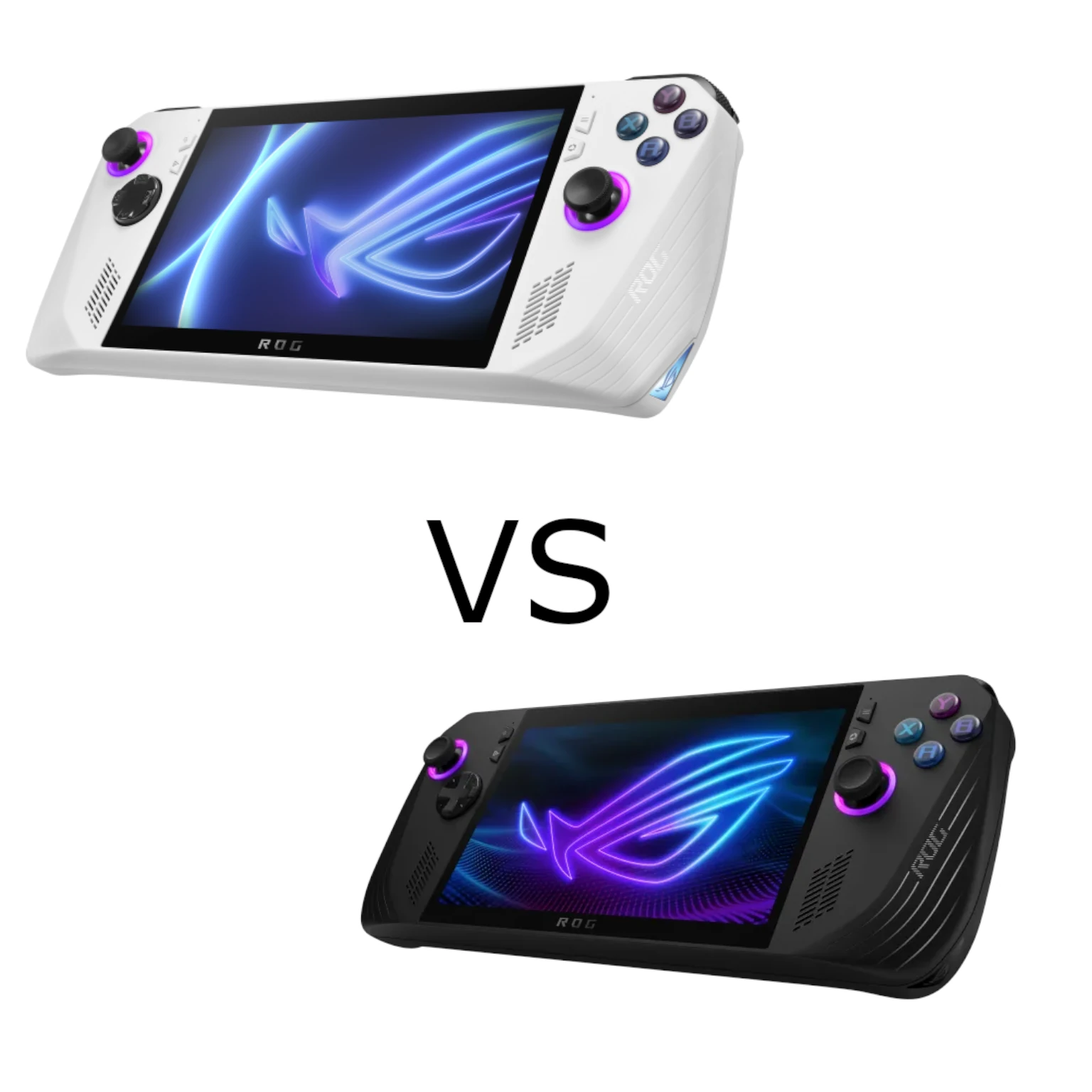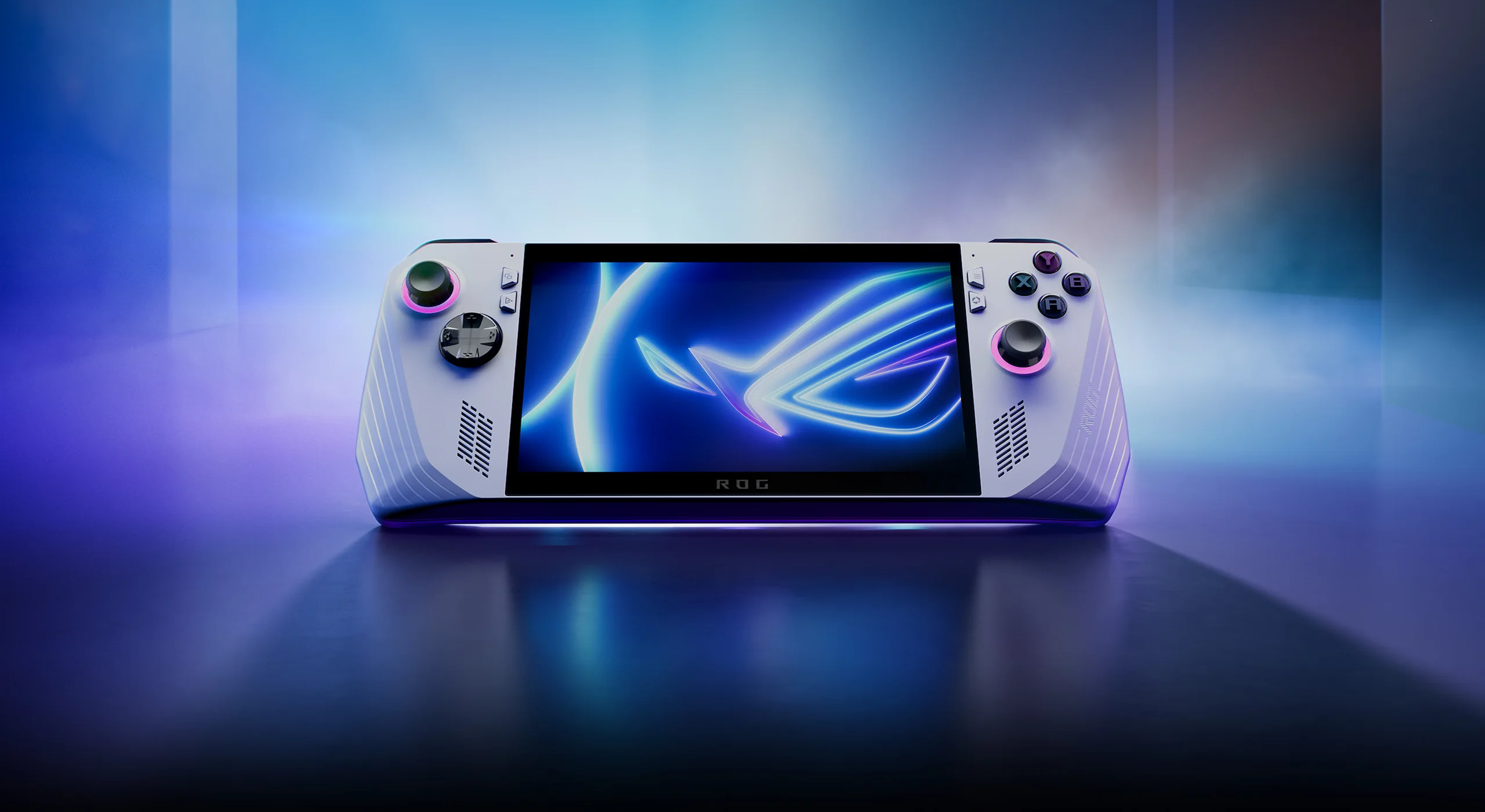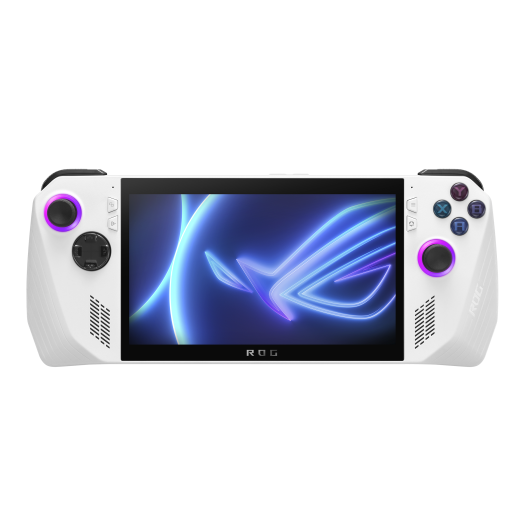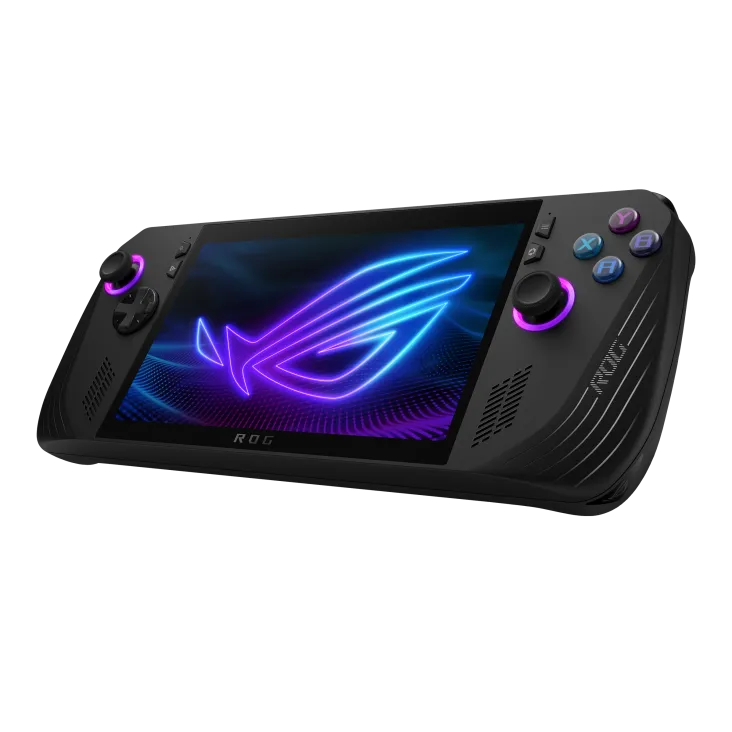
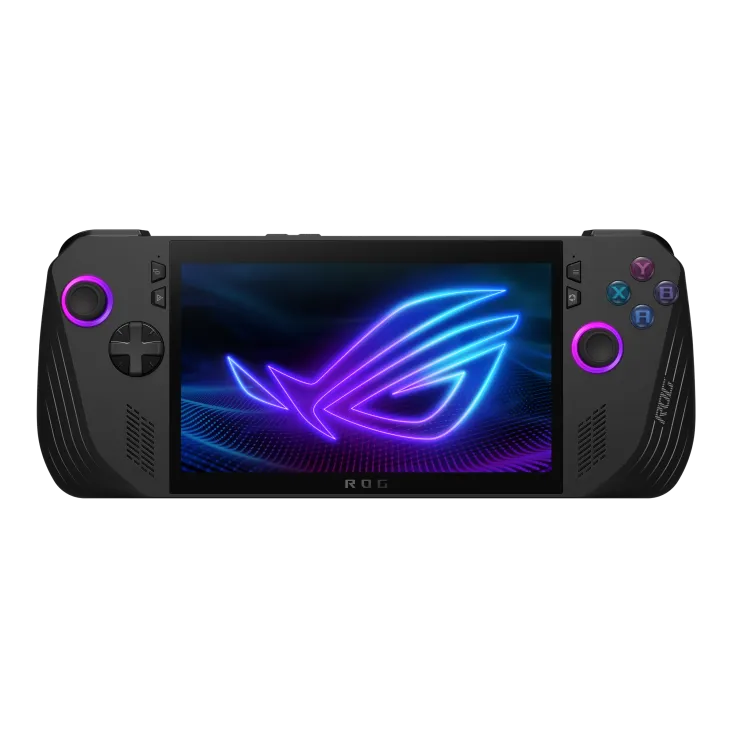
The ASUS ROG Ally X brings Windows PC gaming into a handheld form, with access to familiar game stores and a design intended for play away from a desk. The 2024 model builds on the original Ally’s Ryzen Z1 Extreme platform through a larger battery, more memory, different storage support and revised controls. Those changes make it a compelling option, while the games you play and the settings you choose still determine the experience.
This article covers the 2024 ROG Ally X, model RC72LA. It should not be confused with the later ROG Xbox Ally X, which is a different product. Check the exact model and regional configuration when comparing listings or looking for support instructions.
Hardware at a glance
| Component | 2024 ROG Ally X |
|---|---|
| Processor and graphics | AMD Ryzen Z1 Extreme; 8 CPU cores, 16 threads and 12 RDNA 3 graphics compute units |
| Memory | 24GB onboard memory; ASUS markets LPDDR5X at 7500 MT/s |
| Storage | 1TB PCIe 4.0 NVMe M.2 2280 configuration; check the listed SKU for other capacities |
| Display | 7-inch 1920×1080 touchscreen, 120Hz and AMD FreeSync Premium |
| Battery and weight | 80Wh; approximately 678g |
| Connections | USB4 Type-C, USB 3.2 Gen 2 Type-C, UHS-II microSD and 3.5mm audio |
| Wireless and software | Wi-Fi 6E, Bluetooth and Windows 11 Home |
ASUS’s current specification lists Bluetooth 5.4 with a note that the version may vary with the operating system. Its global specification includes a 1TB model, while the US feature page also advertises configurations up to 2TB. Confirm the actual listing rather than treating 1TB as the maximum available or assuming every unit has the larger drive.
Memory and game performance
The integrated graphics and CPU share system memory. Moving from the original Z1 Extreme Ally’s 16GB to 24GB gives more room for Windows, games and graphics allocations. It does not add a separate graphics card or turn the shared allocation into physically dedicated VRAM.
An 8GB graphics reservation would leave a nominal 16GB of the 24GB pool for other uses, before normal system requirements and overhead. That arithmetic can be helpful, but it is not a reason to select the largest reservation permanently for every game. Check the supported allocation settings and a game’s actual behaviour, then compare using the same scene and configuration.
The advertised memory transfer rate increases from 6400 to 7500 MT/s, about 17% by simple calculation. That is a transfer-rate comparison, not a guaranteed 17% frame-rate gain. Extra memory and bandwidth may help workloads limited by those resources; they cannot eliminate every source of stutter, including shader compilation, storage activity or a demanding game engine.
The Z1 Extreme remains the same processor family as the original higher-spec Ally. Avoid treating the X as a new GPU generation. Compare resolution, graphics preset, upscaling, frame cap, power mode and driver version together. Average FPS alone can hide uneven frame delivery, so a useful comparison also records frame-time consistency under matching conditions.
Battery and portability
The 80Wh battery has twice the nominal capacity of the original Ally’s 40Wh unit. This is one of the X’s most appealing upgrades for portable use. It creates more energy capacity, but actual runtime depends on the game, display brightness, power profile, wireless use, battery condition and the rest of the system’s consumption.
The processor’s power limit is not the total draw of the handheld. A runtime estimate made by dividing battery capacity by an APU setting alone leaves out the display and other components. Treat a quoted number of gaming hours as a test result only when its game, settings and conditions are documented.
A lower frame cap or a less demanding profile may suit travel better than maximum performance. Test the games you intend to play while unplugged, and check the charging arrangement you will carry. A USB-C plug alone does not establish that a power bank, charger or cable supplies the required power-delivery profile. ASUS lists a 65W adapter; regional package contents can differ.
Controls and cooling
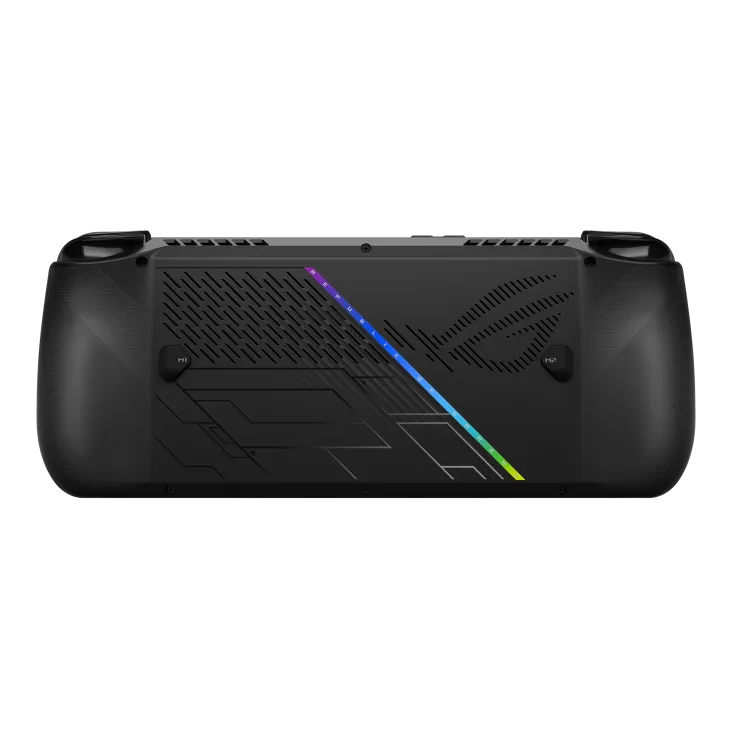
The black chassis includes revised grips, smaller rear macro buttons and an updated D-pad. These changes are part of the comfortable-design appeal, but hand size, grip style and weight are personal considerations. If possible, hold the device for more than a brief demonstration before deciding whether it suits longer sessions.
ASUS’s launch announcement describes stronger joystick springs and a five-million-cycle durability rating. A manufacturer’s cycle rating is not a promise that a stick can never drift or a measurement of how many years an individual owner will get. The specifications distinguish Hall-effect triggers from the thumbsticks; do not assume the sticks use the same sensing technology.
ASUS also redesigned the fans and airflow paths, adding a third exhaust vent. Those are hardware changes, not a guarantee of silent operation or identical temperatures in every game. Keep intake and exhaust areas clear, use the supported fan and power settings, and assess noise in the mode you actually expect to use.
USB-C docking and external graphics
Having two USB-C connections makes charging alongside an accessory more convenient. One is USB4, listed by ASUS with Thunderbolt 4 compliance, DisplayPort 1.4 and Power Delivery support; the other is USB 3.2 Gen 2 with display and charging support. Their capabilities differ, so use the appropriate port and cable for a demanding peripheral.
USB4 offers a route to compatible external graphics enclosures. Check the enclosure, graphics card, firmware, drivers, cable and display arrangement before buying. Compatibility and performance are not guaranteed for every product bearing a Thunderbolt or USB4 label, and the handheld will not automatically perform like a desktop with the same external GPU.
The original proprietary XG Mobile connection is absent. ASUS’s Ally-series FAQ states that the listed older XG Mobile units supported by the original Ally are not supported by the Ally X. Distinguish that connector generation from newer products rather than assuming the XG Mobile name alone establishes compatibility.
Storage and maintenance
M.2 2280 support gives the X a different internal-drive form factor from the original Ally’s M.2 2230. That improves the range of potential replacement drives, but does not prove that every high-capacity drive or attached desktop heatsink fits. Confirm physical clearance, compatibility and the supported installation procedure for RC72LA.
Back up important local saves, files and recovery information before changing storage. ASUS’s upgrade guide contains model-specific battery-connector steps and notes a rear-panel ribbon cable on the Ally X. Follow the matching section or use qualified service support; instructions for the original Ally or later Xbox model should not be substituted blindly.
The microSD reader remains a useful expansion option. The revised design should not be described as eliminating all possible card-reader failures. Keep a backup of important data, and check both the card and reader when diagnosing a problem instead of assuming a single historical cause.
Windows, games and the verdict
Windows 11 and Armoury Crate SE provide access to game libraries, controller settings and performance controls. Check controller support, launcher requirements and offline behaviour for the games you want to carry. A small touchscreen can make some Windows tasks less convenient than a desktop, so a dock or keyboard may be useful for setup and troubleshooting.
The advertised three-month Game Pass offer has eligibility, region and catalogue conditions. Check the purchase and activation terms rather than assigning an automatic value to every used or imported unit. Wi-Fi 6E also needs a compatible network and regional support to use 6GHz; it cannot make an internet download faster than the rest of the connection allows.
The ROG Ally X remains a fantastic option for gamers who value a versatile PC handheld, a larger battery and practical memory and storage improvements. For an existing Z1 Extreme Ally owner, the decision rests on how much those benefits matter relative to the cost and weight. Choose it for the combination that fits your games and travel, supported by comparable tests rather than universal performance promises.