
If you opened your inbox this morning to an alert from Google AI Pro, you were not alone. Under the subject line “Early access: Try Gemini 4 Argon today,” Google DeepMind officially began rolling out its next-generation frontier intelligence model to paid subscribers. While the AI community has spent months analyzing leaks and benchmark rumors, the model is now actively running in production across select tiers.
However, this is a distinct, short-lived rollout window. Right now, Gemini 4 Argon is restricted exclusively to paid tiers—specifically Google AI Pro and Google AI Ultra subscribers in consumer apps, corporate accounts in Gemini for Google Workspace (“Work”), and developers operating inside Google's agentic environment, Google Antigravity. Over the next few days, this exclusive gate will dissolve as Google expands Argon globally across Google AI Studio, the general Gemini API, and free Search AI modes. Here is our personal breakdown of what Google announced today, how the model is deployed across Chat, Work, and Antigravity, and what early VIP testers are reporting from the front lines.
The Email Dropped: Early Access Begins Today
The rollout notification arrived with a clear tagline: “Meet Gemini 4 Argon: Next-era frontier intelligence.” Rather than a developer-only research paper drop, Google's announcement targeted end-users with paid memberships, pitching Argon as an engine built to tackle complex, multi-step workflows with ease and deliver end-to-end results.
The notification emphasized two major real-world pillars that differentiate Argon from its predecessors:
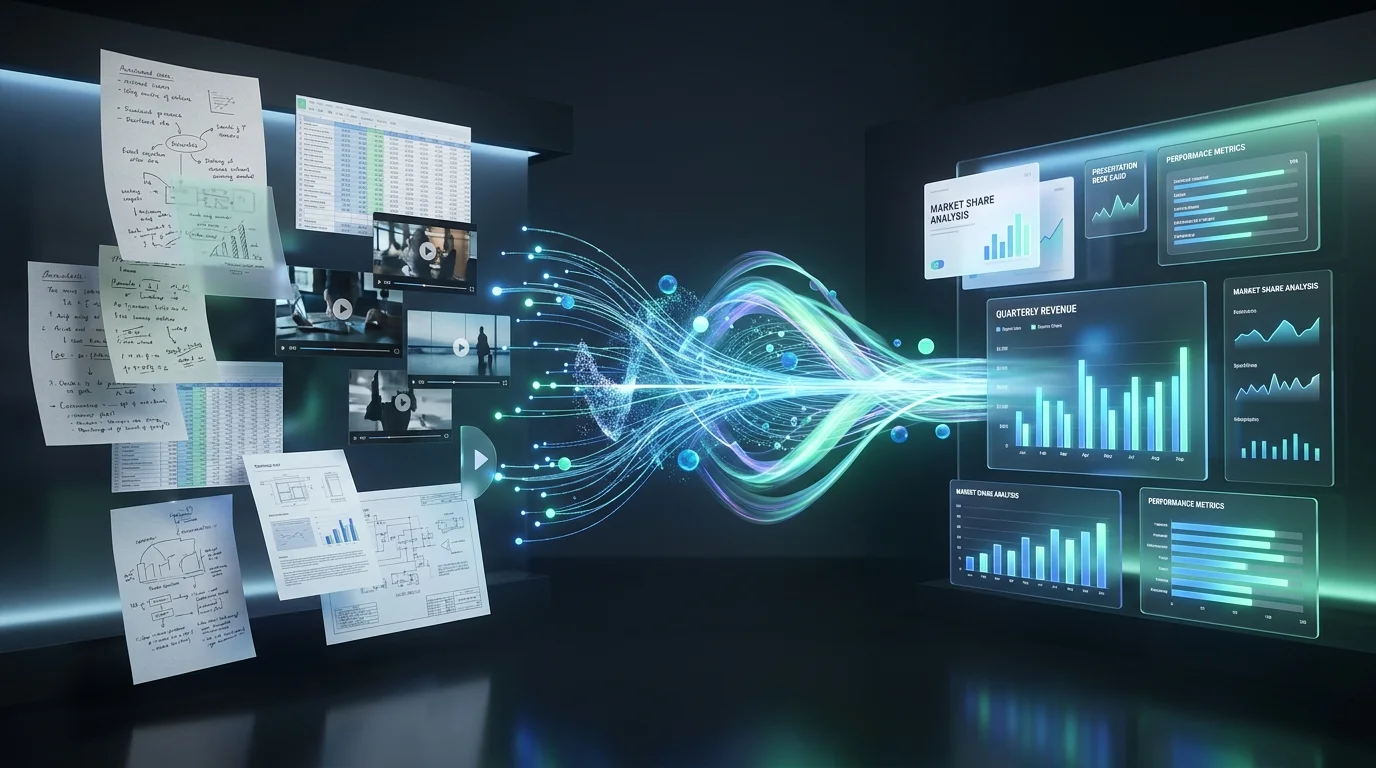
- Turning Messy Inputs into Polished Work: Argon is engineered to ingest raw, unstructured inputs—including handwritten meeting notes, mobile snapshot photos, video recordings, and dense documentation—and synthesize them directly into structured presentation slides, analytical dashboards, and executive data charts without multi-step manual prompting.
- Accelerating Real-World Scientific Research: The model combines spatial visual reasoning, physics simulation understanding, and autonomous coding to support research across advanced mathematics, robotics pipelines, and biochemical modeling.
For paid subscribers, the activation is instant: opening the Gemini web application or mobile client reveals the new model selector badge, while AI Mode in Google Search begins delegating deep queries to the Argon reasoning engine.
What Is Gemini 4 Argon? The Core Architecture & Specs
Under the hood, Gemini 4 Argon represents Google DeepMind's most aggressive architectural refinement yet. While previous versions focused primarily on scaling raw parameter counts and input context lengths, Argon is built around long-horizon computational stamina—the ability to stay logically coherent through hundreds of sequential reasoning steps.
| Capability / Feature | Gemini 3.1 Pro / Flash | Gemini 4 Argon (New Flagship) | Practical User Impact |
|---|---|---|---|
| Context Input Window | 1 Million Tokens | 1 Million Tokens | Full codebase and legal archive ingestion |
| Maximum Output Ceiling | 8,192 – 65,536 Tokens | Up to 1 Million Output Tokens | Can author complete multi-file systems or entire reports without truncation |
| Reasoning Mode | Fixed / Prompt-Guided | Tunable Thinking Levels (Low / Medium / High) | Balance rapid conversational responses against rigorous multi-step proofs |
| Primary Target | General Conversational Chat | Autonomous Deep Work & Coding | Built for agentic execution, self-healing test loops, and data transformation |
| API Pricing (Target) | Standard Frontier Pricing | ~$2 / 1M Input | ~$10 / 1M Output | Exceptional Pareto efficiency compared to rival frontier models |
| Security Evaluation | Standard RLHF Guardrails | CWE-Bench Vulnerability Remediation | Verified automated patching of software vulnerabilities via Fairwind testing |
The standout architectural specification is Argon's generation capacity. While competing models traditionally cap generation at 8,000 to 64,000 output tokens, Argon can sustain generation up to unprecedented limits. In practical terms, this eliminates the dreaded “Continue generating” cutoff when generating complex software architectures, comprehensive multi-chapter reports, or extensive regulatory compliance reviews.
Where Argon Is Live: Chat, Work, and Antigravity
Google has strategically partitioned Argon's early access across three core operational surfaces:
1. Gemini Chat & AI Search Mode (Paid Pro & Ultra Subscribers)
In standard consumer-facing chat, Argon replaces the conversational fluff of earlier models with direct, highly structured answers. It excels at long-form document critique, drafting technical proposals, and answering nuanced technical queries without repetitive corporate disclaimers. In Google Search's AI Mode, Argon acts as a deep research agent, crawling and cross-verifying disparate sources before producing a synthesized briefing.
2. Gemini for Google Workspace (“Work”)
In enterprise environments, Argon is embedded directly into Docs, Gmail, Drive, and Sheets. Rather than acting as a simple grammar assistant, Argon's multi-modal engine can cross-reference multiple 50-page vendor proposals in Google Drive, identify conflicting delivery timelines, and draft an executive comparison spreadsheet complete with formulas and conditional formatting.
3. Google Antigravity (Google AI Ultra Tier)
Perhaps the most significant implementation of Argon is inside Google Antigravity—Google's agent-first development platform. Antigravity combines a desktop workspace, CLI tooling, and an execution sandbox designed specifically for autonomous AI agents.
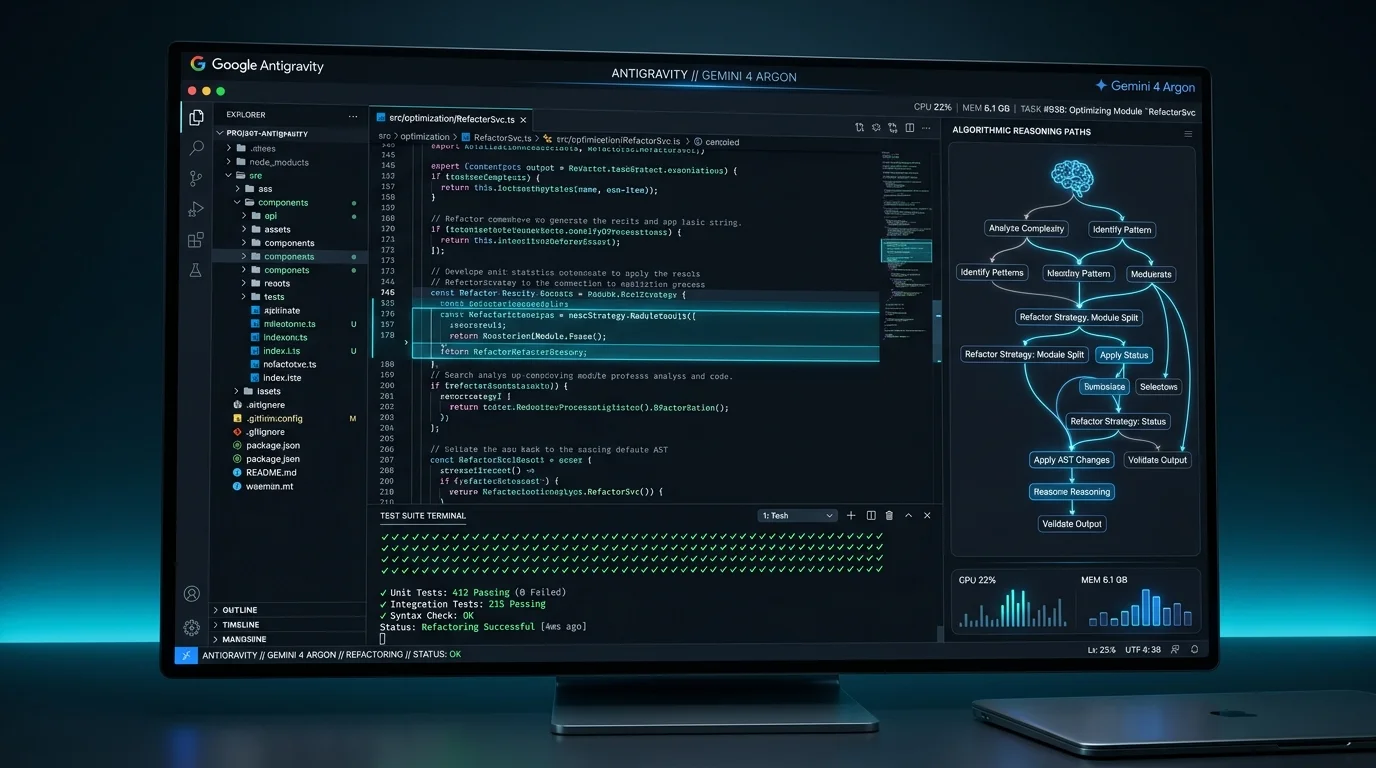
Within Antigravity, Google AI Ultra users can assign Argon entire engineering objectives. Because Argon understands file system operations, terminal syntax, and test runners, it does not just suggest code snippets; it navigates the directory tree, creates branches, updates multi-file dependencies, runs local test suites, inspects compiler outputs, and autonomously self-heals syntax errors until all verification checks pass.
Early Impressions from VIP Users & Enterprise Pilots
While general availability is still a few days away, select VIP developers, enterprise pilot partners, and tech evaluators have been putting Argon through early evaluations. Stated clearly as initial, first-wave feedback, here is what early testers are reporting:
Editorial Note: These observations represent initial reviews and pilot impressions from early-access enterprise testers and community evaluators as Argon rolls out, rather than our own independent laboratory benchmark suite.
1. Drastically Reduced Conversational “Floof”
Multiple early reviewers note that Argon communicates in a far more direct, concise, and professional tone than Gemini 3.1 Pro. The model largely eliminates boilerplate conversational pleasantries, excessive corporate hedging, and repetitive phrasing. Progress updates during long tasks are structured into clean, technical checkpoints.
2. Long-Horizon Agent Stability
Enterprise pilot evaluators, including teams at firms like Deloitte who evaluated Argon for extended workflows, report that the model exhibits exceptional context retention over long operational horizons. Where previous agents frequently “drifted” or lost track of original system instructions after 10 or 15 tool executions, Argon maintains strict adherence to project requirements across hours of agentic problem-solving.
3. Massive Codebase Refactoring
Early developer reports from software engineering tests highlight Argon's ability to tackle legacy codebases. In one verified enterprise trial, Argon was tasked with auditing a legacy codebase containing thousands of lines of manual SIMD intrinsics and refactoring it into memory-safe Rust with equivalent vectorization. The model not only completed the translation but also generated comprehensive regression test suites that caught subtle edge-case rounding errors.
4. Biotech and Scientific Reasoning
In life sciences and biotechnology testing (such as evaluations by Axiom Bio), early users reported that Argon demonstrated genuine cross-modal fluency. Testers provided raw mass spectrometry data, cellular microscopy images, and molecular formulas; Argon successfully identified anomalous protein folding indicators and accelerated setup commands for computational chemistry simulation packages like xTB.
5. The “Thinking Pause” vs. Output Speed
Testers note a noticeable behavioral difference when Argon operates in its “High Thinking” mode. On complex logic, physics, or algorithmic challenges, there is a deliberate latency pause of 5 to 15 seconds before the first token appears. Early reviewers consistently agree, however, that this trade-off is well worth it: once generation begins, it streams rapidly, and the reasoning path reflects rigorous step-by-step verification rather than hurried, hallucinatory guesses.
The Exclusive Window: Should You Upgrade or Wait?
If you already subscribe to Google AI Pro or Google AI Ultra, Gemini 4 Argon is waiting for you in your account dropdown today. For developers with Ultra tier access, firing up Google Antigravity offers a genuinely impressive glimpse into the future of autonomous agentic programming.
However, if you are currently on a free account or wondering whether to upgrade solely for this model, the practical advice is simple: wait a few days. Google's early-access window for paid users is a transitional ramp-up to ensure infrastructure stability. Over the coming week, Google is scheduled to widen access to Google AI Studio, provide pay-as-you-go developer API keys (under the gemini-4-argon endpoint), and roll out general availability across wider tiers.
Gemini 4 Argon confirms that the frontier AI race is entering an entirely new phase—one defined not by who can generate a clever chatbot poem, but by which model can autonomously refactor enterprise software, synthesize complex multi-modal research, and execute real work without supervision.