Artificial Intelligence (AI) describes systems that produce useful predictions, recommendations, decisions or generated content from inputs. “Teaching a computer to think” is a helpful analogy, but AI does not have to work the way a human brain does. Imagine you have a robot friend that can play games with you, recognize your voice, or even help you find the best route to a new place. AI is the technology that allows computers and machines to do these things.
Just like people learn from experience—like how you get better at riding a bike the more you practice—AI can learn from data. For example, if you show an AI program thousands of pictures of cats and dogs, it can learn to recognize which is which. During training it can improve on a chosen task, although the quality of data and evaluation matters. A deployed system may be fixed until its next update; using it does not necessarily train it continuously.
AI is used in many things you encounter daily, like your smartphone's voice assistant, the recommendations you get on Netflix, or even the way your email filters out spam. It’s a powerful tool that helps machines perform tasks that usually require human intelligence, such as understanding language, recognizing images, or solving problems.
In simple terms, AI is like giving machines a little bit of brainpower so they can help us with tasks, make our lives easier, and sometimes even do things faster or better than we could on our own.
How is AI helping us?
AI can help with many tasks, but benefits depend on the particular system, its users and the setting. Here are some practical examples:
- Healthcare: AI-enabled medical devices can analyze images or other clinical data to support detection, diagnosis or treatment. Performance must be evaluated for the specific device and intended population; an ordinary chatbot is not interchangeable with a validated medical tool or a clinician.
- Transportation: AI can help interpret sensor data in driver assistance and automated-driving systems. Levels of automation differ: assistance that steers or controls speed may still require the driver’s attention. Check the exact system’s operating conditions rather than treating “AI-powered” as proof that a car can drive everywhere by itself.
- Creativity: AI is even making its mark in the realm of creativity. AI-powered tools can generate art, music, and even write stories. For example, AI can be used to create unique and visually stunning paintings or compose original pieces of music. This technology is expanding the boundaries of human creativity and inspiring new forms of expression.
- Customer service: AI is enhancing customer service experiences by providing instant and personalized support. Chatbots and virtual assistants powered by AI can answer customer inquiries, provide recommendations, and even resolve issues. This can reduce repetitive work when answers are reliable and the user has a clear route to a person for unresolved issues.
- Education: AI is revolutionizing education by providing personalized learning experiences. AI-powered tutoring systems can adapt to each student's individual needs and pace, offering tailored instruction and support. These tools can support practice, but students and teachers still need to check explanations and use them in ways that develop understanding rather than simply copying answers.
- Environmental conservation: AI can support environmental analysis. For example, AI can be used to analyze satellite imagery to monitor deforestation and track wildlife populations. Additionally, AI can help optimize energy consumption and reduce waste.
- Financial services: AI is used in financial services for tasks such as anomaly detection and risk analysis. AI-powered algorithms can analyze vast amounts of data to identify patterns and anomalies that may indicate fraudulent activity. The usefulness of a result depends on current data, validation and appropriate oversight. An AI-generated prediction does not guarantee an investment outcome.
These are just a few examples of how AI is making a positive impact on our world. As AI technology continues to advance, we can expect to see even more innovative and beneficial applications in the years to come.
How does AI work?
Many AI systems learn patterns from data through machine learning, while others use knowledge-based rules or combine techniques. Not all automation is AI, and not all AI is machine learning. As an analogy, imagine teaching a child: You show the child many examples, and over time, the child learns to recognize patterns and make predictions.
For example, if you show an AI many pictures of cats, it will learn to recognize cats. It does this by identifying features that are common to all cats, such as whiskers, paws, and tails. Once the AI has learned to recognize cats, it can be used to identify cats in new images.
AI can also use algorithms, which are like sets of rules, to solve problems. Algorithms can be used to perform tasks such as searching for information, making decisions, and generating new ideas.
There are many different types of machine learning algorithms, each with its own strengths and weaknesses. Some algorithms are better at recognizing patterns, while others are better at making predictions. The choice of algorithm depends on the specific task that the AI is trying to accomplish.
Deep learning is part of machine learning, while natural language processing describes work with human language and can use several techniques. Deep learning is a type of machine learning that uses artificial neural networks to learn from data. Natural language processing is a field of AI that deals with the interaction between computers and human language.
Can AI take over the world?
We should treat AI as a tool that people develop, deploy and govern, rather than assuming a fluent chatbot has human intentions. Predictions about future systems are uncertain; saying that harmful outcomes are impossible would be as unhelpful as treating a film plot as evidence.
Practical risks exist without consciousness. An incorrect recommendation, a biased decision or a tool-enabled system taking an unintended action can cause harm. Limit permissions, test the intended use and keep people accountable for consequential decisions. Rules and oversight help, but do not guarantee every system will behave safely.
Will people lose their jobs because of AI?
AI can change tasks within jobs, automate some work and create demand for new skills. The effect will differ by occupation and workplace. The ILO’s research distinguishes exposure—tasks a technology could affect—from demonstrated job losses; exposure alone does not predict that an entire occupation will disappear.
The ILO’s 2025 analysis suggests transformation is more likely than complete replacement for many jobs, while recognizing risks to workers and job quality. That is a research assessment, not a guarantee that nobody will lose work or that new roles will compensate everyone. Training, worker participation and how employers adopt the tools all matter.
Is AI the same as a robot?
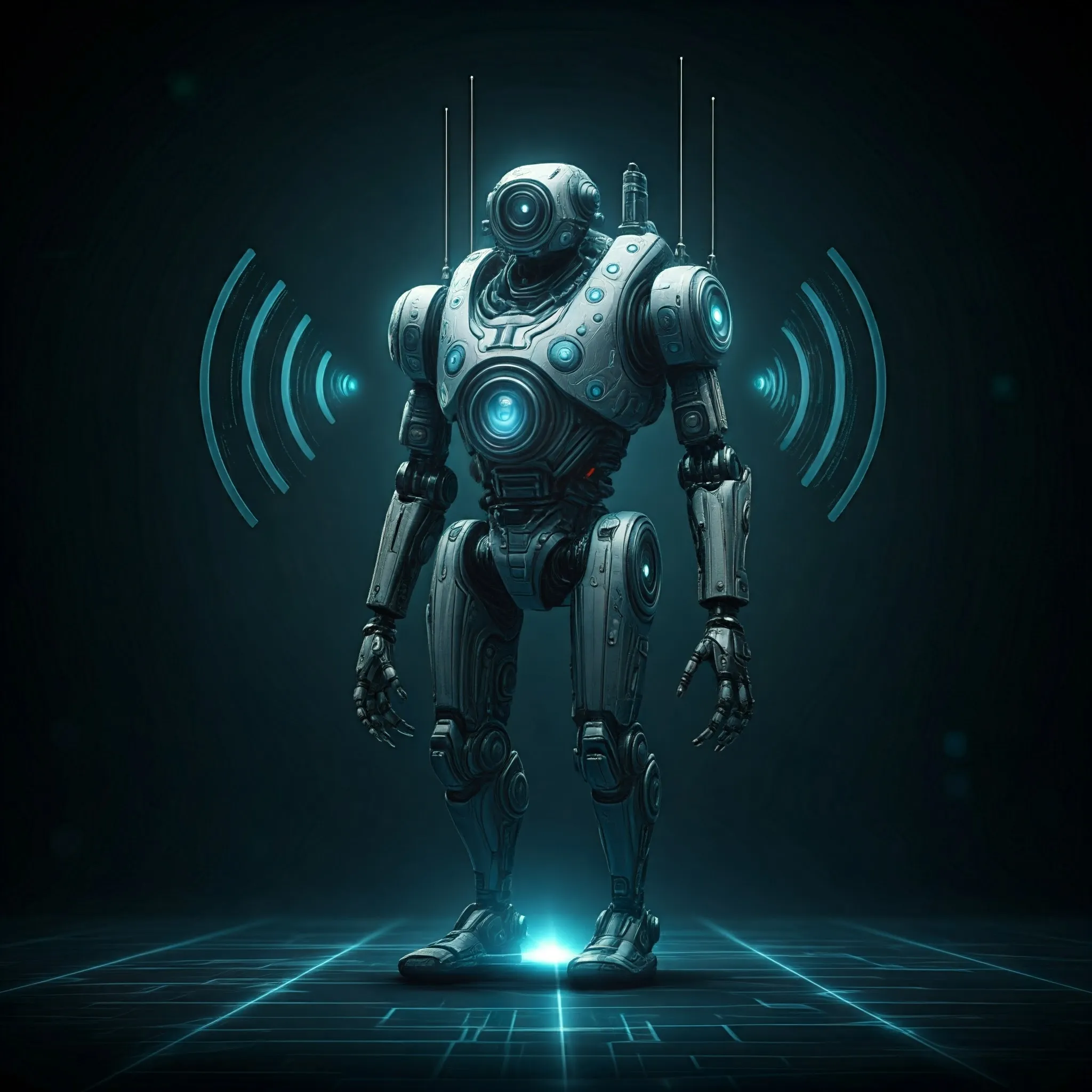
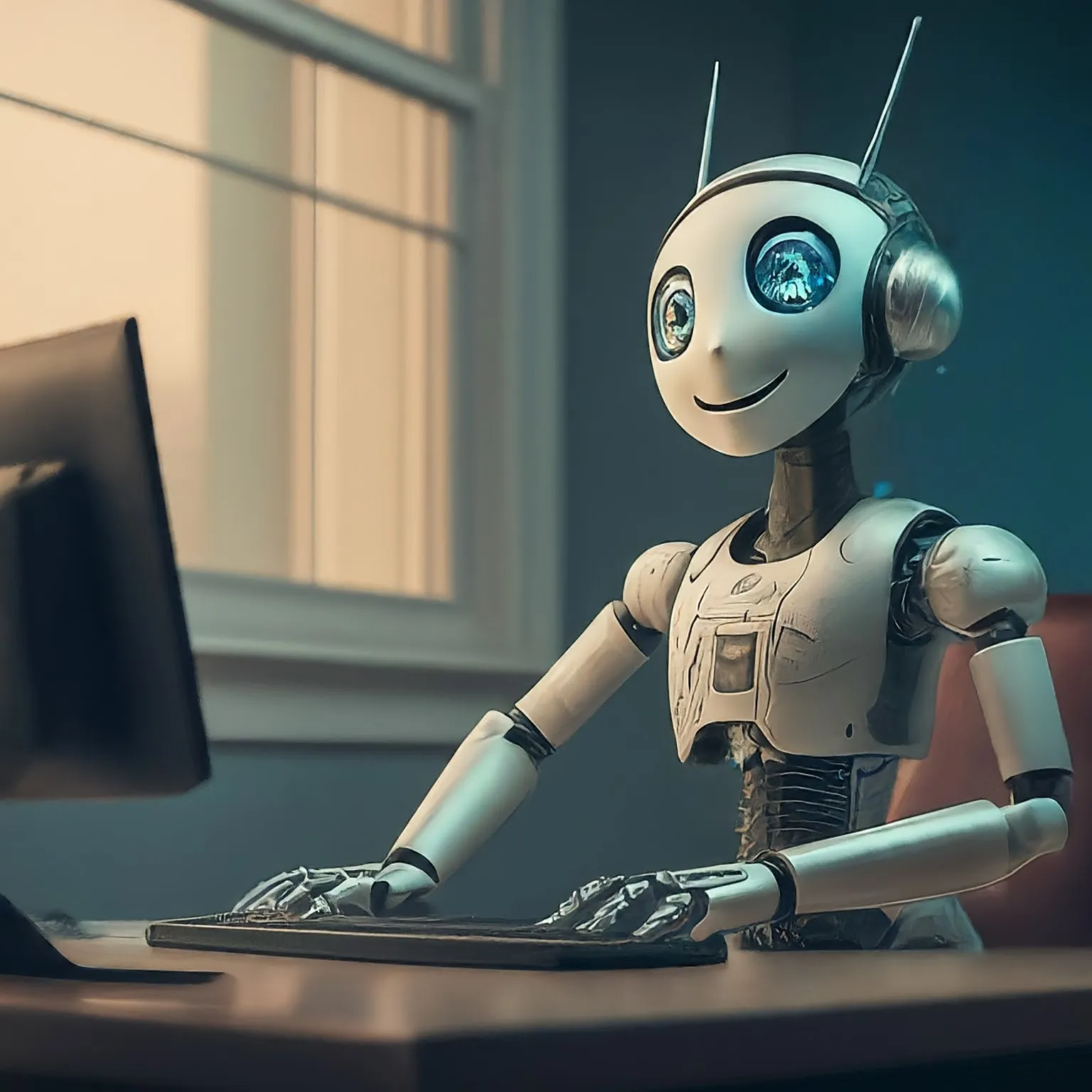
Not exactly. While robots are physical machines that can perform tasks, AI is the "brain" or software that can make decisions and learn from experiences. Some robots use AI to perform complex tasks, like navigating a room or responding to voice commands, but AI can also exist in software alone, like a virtual assistant on your phone.
Is AI safe?
AI safety depends on the system and use case. Errors can arise during ordinary intended use as well as deliberate misuse. NIST’s voluntary AI Risk Management Framework emphasizes assessing trustworthiness throughout development, deployment and evaluation rather than assuming a product is safe because it is designed to help.
A useful everyday habit is to check significant facts against original sources, review a generated change before applying it and avoid sending private information without understanding where it will go. Human oversight also needs time, expertise and a real ability to intervene; a rubber-stamp approval is not enough.
Can AI think or feel like a human?
An assistant’s human-like wording is not evidence that it has feelings or personal experience. It can generate a sentence about being happy because that wording fits the conversation. Questions about machine consciousness remain research questions; judge a practical tool by its demonstrated behavior, and do not mistake an emotional-sounding reply or a claim to be human for proof.
Examples of AI Products and Models
ChatGPT (OpenAI) - ChatGPT is an AI chatbot that can engage in conversation, answer questions, and provide information on various topics. It's used for everything from casual chat to more specific tasks like writing, tutoring, or brainstorming ideas.
Gemini - Much like ChatGPT, but built by Google and is integrating into a lot of Google's products and environment.
Leonardo - Leonardo is an AI-powered tool designed to assist with creating high-quality images and artwork based on user prompts. It leverages advanced AI models to generate visuals for various purposes, including graphic design, concept art, and creative projects. Similar to other AI-driven image generators, Leonardo allows users to describe what they want in detail, and the AI then interprets the description to produce a visual interpretation; the result may need revision and review.
Dall-E is an AI model that can generate images from text descriptions. The linked DALL-E 3 announcement is a historical example from the period of this 2024 article, rather than a recommendation of the current model lineup. Image tools can explore a visual idea, but prompt compliance, quality and permitted uses have limits. For example, if you ask for "a cat wearing a hat riding a bicycle," Dall-E can create a whimsical image of a feline cyclist.
The Core Branches of Artificial Intelligence Compared
These categories overlap. Learning methods describe how a system is trained; computer vision and language processing describe tasks; generative AI describes creating content. None implies a fixed dataset size or guaranteed accuracy.
| Term | What it describes | Example |
|---|---|---|
| Supervised learning | Learning from inputs paired with target answers. | Classifying messages or predicting a numeric value. |
| Unsupervised learning | Finding structure in data without supplied labels for the desired groups. | Grouping similar observations. |
| Reinforcement learning | Learning a policy from feedback on actions. | A game-playing system trained using rewards. |
| Deep learning | Using neural networks with multiple layers. | Image recognition or language modeling. |
| Generative AI | Producing content from learned patterns and supplied inputs. | Drafting text or generating an image. |
A model needs evaluation on examples separate from those used to train it. If a cat classifier has only seen indoor pets, photographs in different lighting or unfamiliar settings may expose weaknesses. More data is not automatically better when labels are wrong or important conditions are missing.
Narrow AI (ANI) vs. General AI (AGI)
“Narrow AI” usually means systems designed or evaluated for particular capabilities. “Artificial General Intelligence” describes proposed broader capabilities, but there is no single universally agreed definition or test. A system can perform well across several tasks without demonstrating every capability people associate with general intelligence.
Memory, autonomous tool use and consciousness are separate questions. An assistant can store information or act through connected software without establishing human-like awareness. Likewise, describing a language model’s token prediction does not describe every part of an application that may also retrieve documents, run tools or apply rules. Ask what a particular system can do under tested conditions.
Cloud AI vs. Local Self-Hosted AI in Your Homelab
Cloud services offer convenient access, while local models can give you more control over where inference happens. Tools such as Ollama can run supported models on suitable hardware, but RAM, VRAM, model size, quantization and context length affect what fits and how quickly it responds. A mini PC and a gaming GPU do not provide identical performance.
After installing Ollama through its official instructions, this is one documented model example:
ollama run llama3.1:8bThe first run downloads the model if needed, so allow disk space and internet access. Check the model’s license and hardware requirements. This illustrates inference, not training a model from scratch or a benchmark of your machine.
Local hosting does not guarantee 100% privacy. Ollama’s FAQ distinguishes local inference from cloud-hosted models and documents a local-only setting to disable its cloud features. Your web interface, plugins, search, embeddings, backups or remote API configuration can still send information elsewhere. Review the whole path, control access and protect stored prompts rather than relying on the word “local.”
A local setup can avoid a cloud service’s per-user fee, but hardware, electricity and maintenance still cost money. Compare a small trial on your own task before choosing either approach; no deployment or performance measurement is implied by the example here.
A Practical First AI Task
Start with a low-stakes task you understand, such as outlining a hobby article or explaining a small piece of code. Provide relevant context, ask for a clear format and check the result against the material you supplied. Save time spent reviewing as part of the comparison: a fast answer that needs extensive repair may not help.
For generated factual text, open the cited sources and verify the exact claim. Confident explanations and plausible citations can be fabricated. For code, review dependencies and behavior, then test in an appropriate environment. If a tool can send messages, modify files or control devices, limit its permissions to the task and keep approval for consequential actions.
These habits let you explore the useful parts of AI while remaining responsible for the result. You do not need to understand every model detail to ask what evidence supports an answer and what happens if it is wrong.
In conclusion
AI is a powerful tool that can help us in many ways. It's important to learn about AI and understand how it works. By working together, we can use AI to make the world a better place.